
Mobility in rural areas often revolves around individualized solutions, such as private cars, creating challenges such as traffic congestion, environmental strain, and restricted access for socially disadvantaged and physically impaired individuals. To address these issues, the INTE:GRATE project is setting out to transform mobility in Saarland by offering groundbreaking transparency and data-driven decision support for policymakers, businesses, and public transportation providers.
The project aims to analyze and understand the current state of system transport in Saarland, offering insights into the factors driving strong individualization in rural mobility. By leveraging innovative AI-based services, INTE:GRATE will provide actionable recommendations to shift from individual to system-oriented mobility, focusing on inclusivity and efficiency.
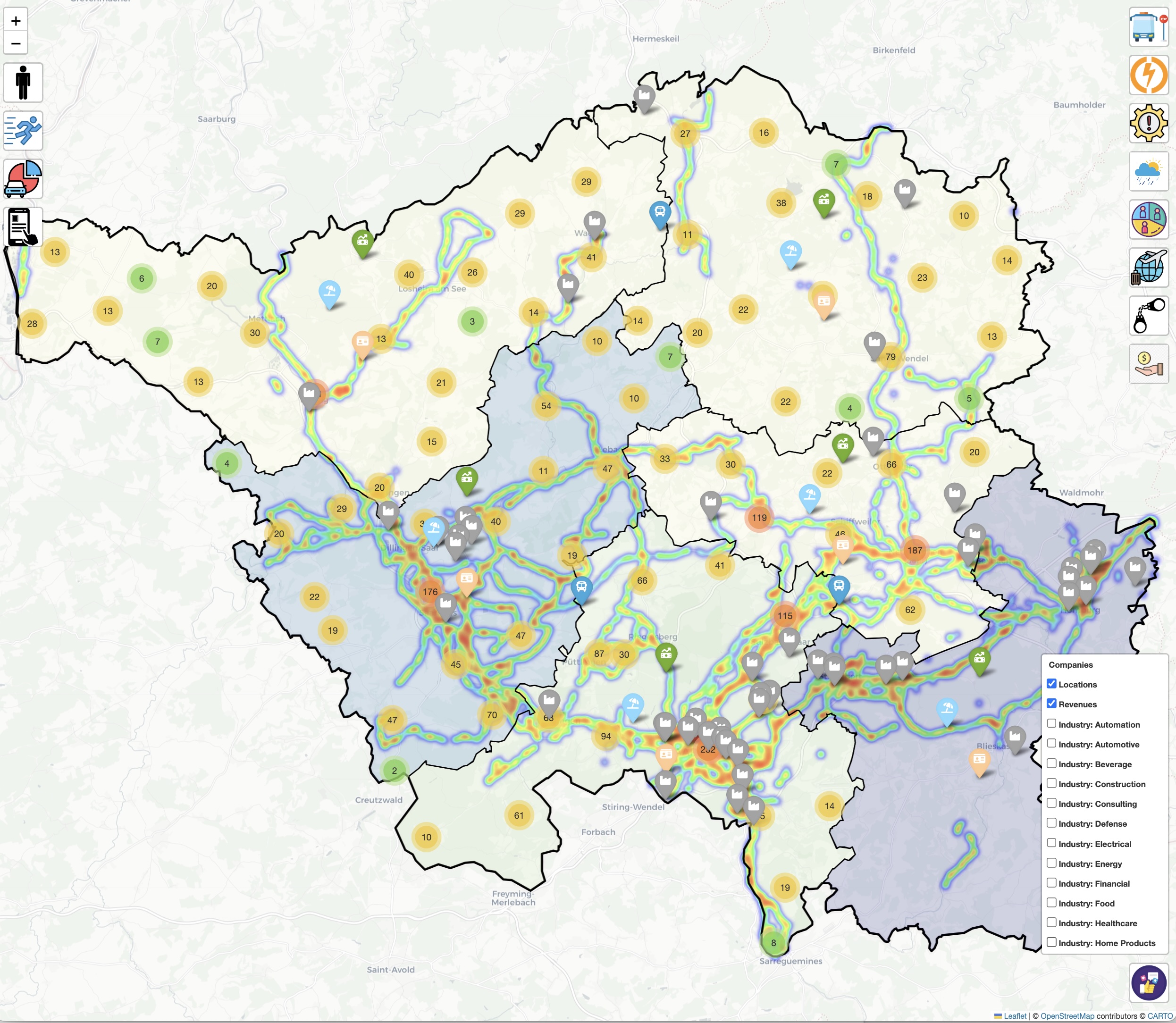
Through aggregating diverse data streams—including movement data, demographic trends, mobility app usage, infrastructure data, and economic indicators—INTE:GRATE will distill this information into district-level insights. The project will identify mobility patterns and influencing factors, enabling smarter traffic bundling, enhanced mobility efficiency, and strengthened social and cultural participation, particularly for marginalized groups.
Key objectives of the INTE:GRATE project include:
- A detailed analysis of current transport systems in Saarland.
- Development of AI-driven decision support tools to guide stakeholders.
- Tailored recommendations to improve system mobility and ensure equal access for all citizens, regardless of their physical or social status.
Presentation of Results at the Saarland State Parliament
The project reached an important milestone today as its preliminary results were presented to the Transport Committee of the Saarland State Parliament by Prof. Wolfgang Maaß. This presentation marked a significant step in fostering dialogue with policymakers and stakeholders, providing them with actionable insights and recommendations to drive meaningful change in regional mobility.
The outcomes of this initiative promise a mobility revolution in Saarland, paving the way for a sustainable, inclusive, and efficient transportation future.
Collaboration and Funding
The INTE:GRATE project is a collaborative effort with the HTW University of Applied Sciences and is funded by the European Regional Development Fund (EFRE) of the European Union.